
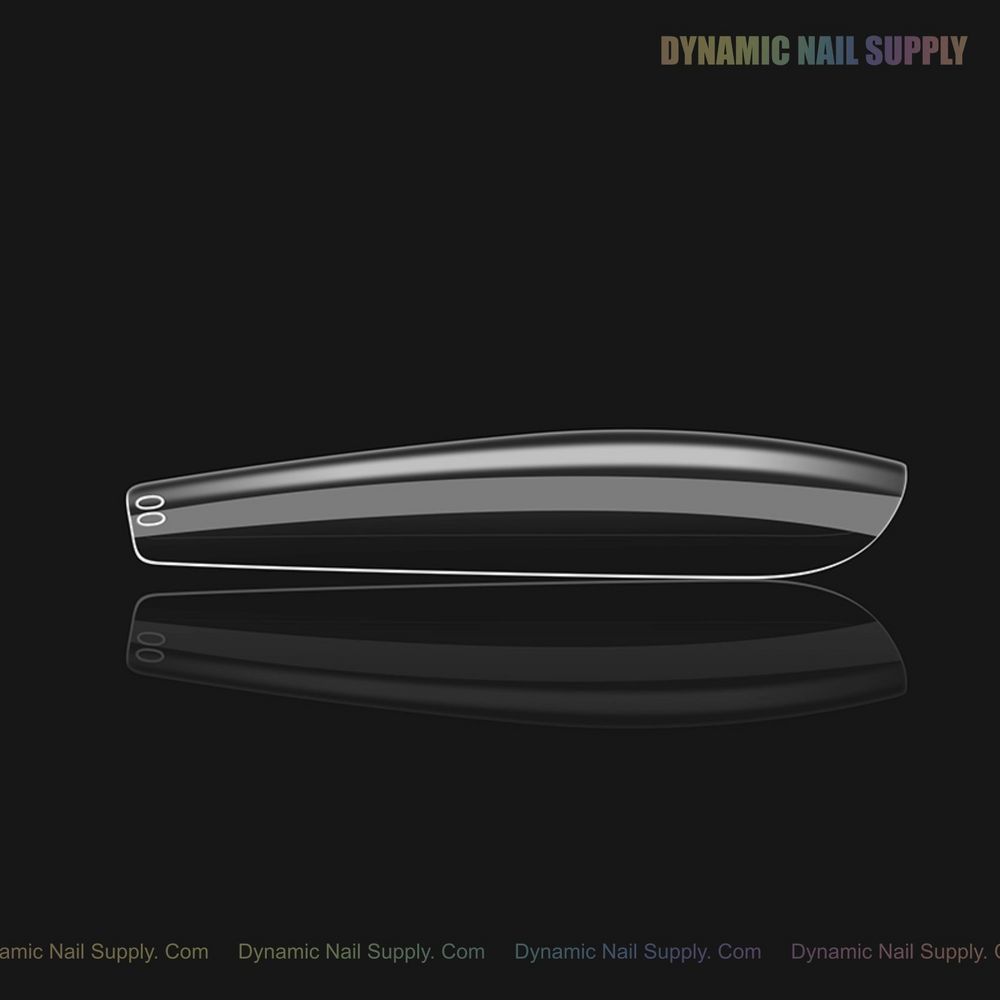
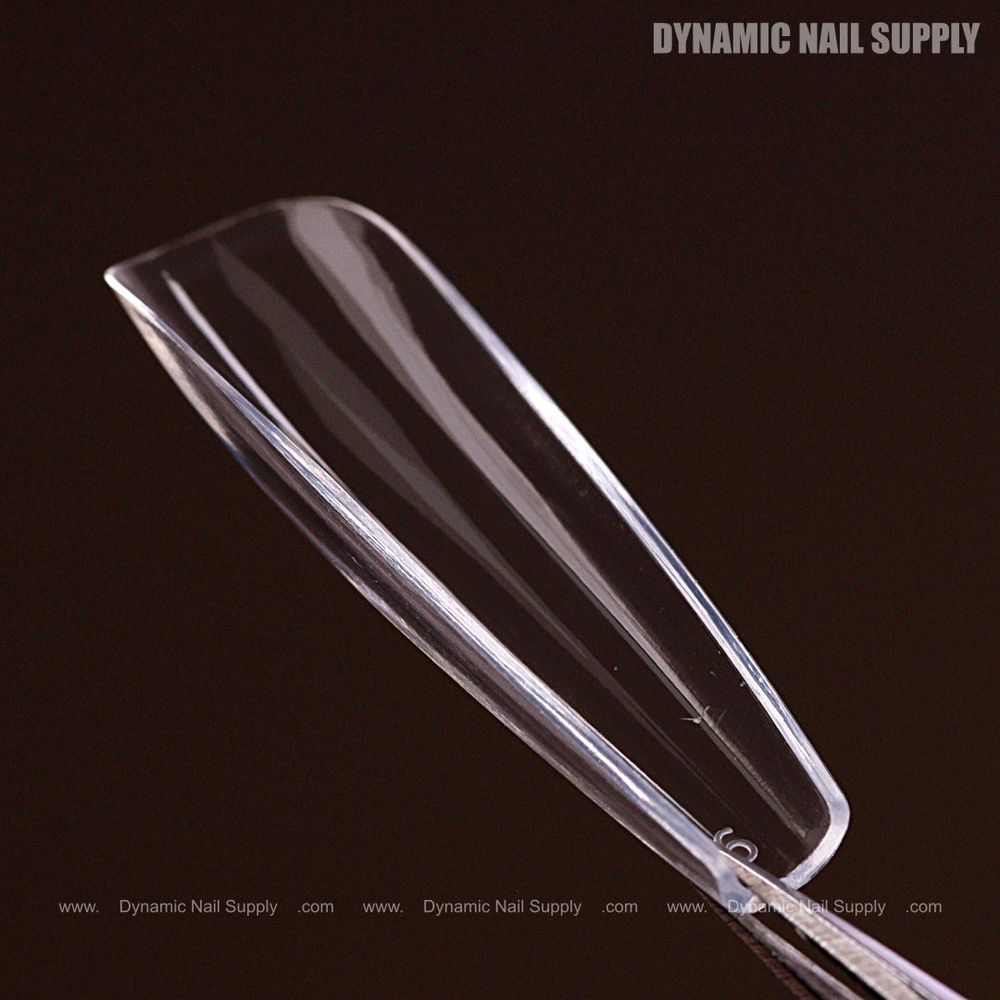
Natural Coffin (Long) glossy clear full-cover tips are suited to careful thinning and shaping with both an e-file and hand tools.
Which workstation and supplies are needed?
Which basic kit does a technician need? A tidy station helps reduce slipping and accidental pressure. Suggested supplies: an e-file with variable RPM control, carbide and grit bits (see below), hand files of 180/240/320 grits, a soft buffer, lint-free wipes, dehydrator, max-bond product, a thin gel or tip glue for bonding, an LED lamp for curing, and the Natural Coffin (Long) tips in their pink compartment case. A small dish of isopropyl or cleaning solution is useful for bit wipes.
Which e-file bits and RPM ranges work best?
Which bits are recommended for initial thinning? Begin with a medium-coarse carbide barrel or a pear-shaped carbide at low speed to remove bulk from the tip underside and sidewalls. What RPM range is safe? Start around 8,000–10,000 RPM for soft-gel full-cover tips and reduce speed if vibration or heat appears. Which bit next? Switch to a fine carbide or a small taper diamond for refining the sidewalls at 6,000–8,000 RPM. When is the lowest speed used? Use 3,000–5,000 RPM with fine diamond bits for final blending near the cuticle and to refine the apex without digging in.
What hand-file grit sequence preserves strength and gloss?
How should hand work follow the e-file? After mechanically thinning, follow a gentle hand-file progression: 180 grit only on the natural nail to remove shine before bonding (avoid aggressive filing on the tip body). Use 240 grit to even out e-file marks on the soft-gel tip, then 320 grit to smooth edges. Finish with a soft buffer to remove light scratches—avoid over-buffing the glossy surface to keep the clear shine intact. When in doubt, less is safer: preserve the tip’s thickness around the stress area at the free edge and apex.
How does the workflow flow: step-by-step for one nail?
- How is the tip inspected? Map sizes and choose the best-fitting tip from the pink case; check for splits or blemishes.
- How to prep natural nail? Lightly buff the natural nail only to remove surface shine; clean with a wipe and apply dehydrator and max-bond product.
- How to prep the tip? Lightly rough the underside with a 240‑grit or fine carbide at low speed—avoid thinning at the very edge that will sit on the free margin.
- How to bond? Apply a thin layer of glue or gel to the tip underside, seat at a shallow angle, press to expel air, flash-hold and cure the hand under LED for 30 seconds.
- When to use the e-file? With the tip secure, remove excess bulk from the underside and sidewall at 8,000–10,000 RPM, keeping the bit moving along the contour to avoid heat buildup.
- How to refine? Drop to 6,000–8,000 RPM and refine sidewalls; finish at 3,000–5,000 RPM for cuticle blending and apex refinement.
- How to hand-finish? File with 240 then 320 grit to remove tiny e-file marks; soften edges with a buffer and continue with chosen color or topcoat.
How can technicians avoid common problems?
- How to prevent cracking? Avoid aggressive thinning at the stress point; keep a continuous curve and maintain thickness at the apex.
- How to prevent heat or chatter? Use short passes, keep the bit sharp and lower RPMs near the cuticle.
- How to avoid dulling the gloss? Limit dry hand-buffing of the tip surface; do final smoothing with a very fine buffer only when necessary.
- How to keep the clear look? Clean dust from the underside and sidewalls before curing so trapped particles don’t cloud the finish.
Best for and Not ideal for
- Best for: technicians who need clean, repeatable long coffin silhouettes; clients who want a glossy clear base for nail art; practice shaping and sculpting exercises.
- Not ideal for: heavy-handed filing styles that remove too much thickness; services that require very textured or matte finishes without additional coating.
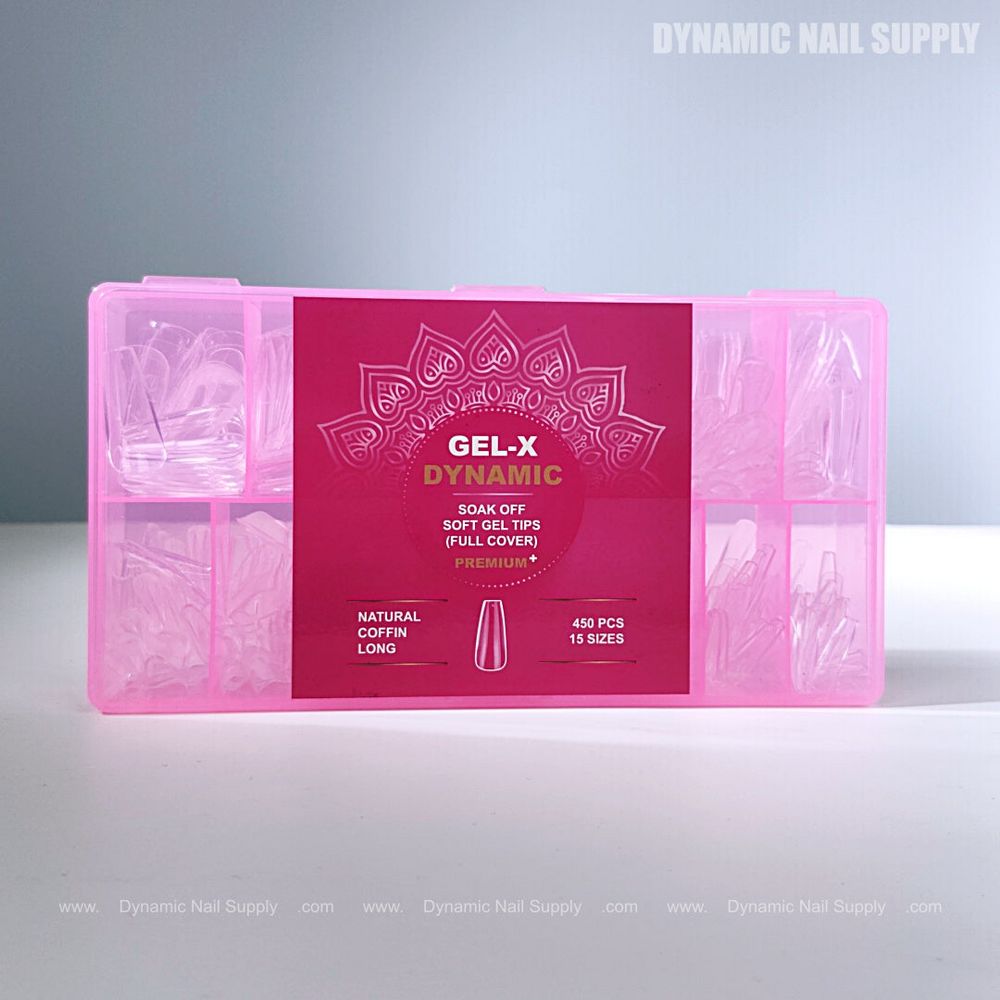
Which final notes on safety and care are important? Keep bits clean and replace dull bits promptly; wear a dust mask and protect the client’s skin from prolonged heat. Handle the glossy clear tips gently in the pink storage case to avoid scratches before application.
The Natural Coffin (Long) tips deliver a clear, salon-ready blank for shaping; treat them with controlled e-file passes and a conservative hand-file sequence to keep strength and shine. Prices may change, and this item often ships in its bubblegum-pink divided case with labeled sizes. For practical use guidance about these specific clear long coffin tips, consult Natural Coffin Long tips.
Final verdict: Use low-to-moderate RPMs, a graduated bit approach, and a careful 240→320 hand-finish sequence to shape long coffin soft-gel tips safely and keep their glossy look.
